

Key Takeaways: California courts may order supervised visitation when there are concerns about a child’s safety with one parent, so the parent’s time with the child happens only while a neutral adult or professional monitor is present. Judges decide these cases under the best interests of the child standard and often look at domestic violence, abuse claims, substance misuse, abduction risk, or a long absence. The main rules come from Standard 5.20 of the Standards of Judicial Administration and Family Code § 3200.5, which set qualifications for professional and nonprofessional providers. Restraining orders under the Domestic Violence Prevention Act (including Family Code § 6320), the statewide forms required by Government Code § 68518, and local mediation rules can also shape visitation terms. Supervision is generally not meant as a punishment, and a court may change the order when circumstances change, so specific evidence and clear order terms help parents protect their children.
California courts may order supervised visitation when a judge has concerns about a child’s safety with one parent. The parent can usually still see the child, but only while a neutral adult or professional monitor is present. The rules come from the Family Code, the California Rules of Court and Standards of Judicial Administration, and local court rules. If you are a San Diego County parent worried about domestic violence, substance misuse, or other safety risks, these rules may affect how you protect your child.
Every case depends on its own facts, and getting guidance early can affect how the court views the safety concerns you raise. Smith Family Law helps parents put clear, enforceable, child-centered visitation terms in place. Call (619) 431-3131 or contact us now to talk about your situation.
What Supervised Visitation Means in California Family Court
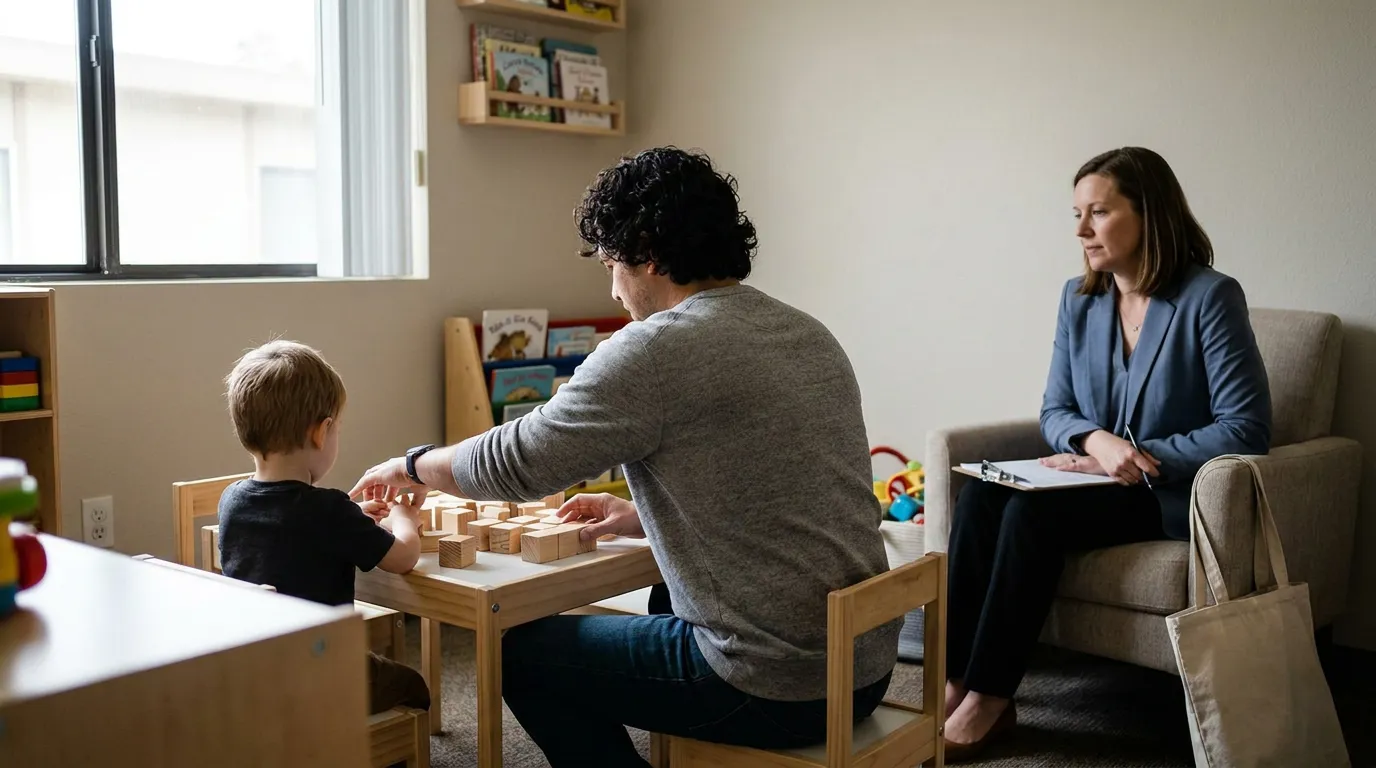
Supervised visitation is a court-ordered arrangement where a parent’s time with the child happens while another adult or agency watches. The California courts’ Self-Help Guide lists it as one type of visitation a judge may order, generally when there are concerns about a child’s safety with one parent. The monitor keeps the child safe during the visit and, when needed, protects the other parent.
Courts decide visitation using the best interests of the child standard. Under Family Code § 3011, judges consider the child’s health, safety, and welfare, any history of abuse or domestic violence, and a parent’s habitual or continual use of alcohol or controlled substances. Supervision lets a court keep the parent-child relationship going while reducing risk. It is not meant as a punishment, and a court may change the order later. In some domestic violence cases, Family Code § 3044 also creates a rebuttable presumption against giving custody to the abusive parent.
Common Reasons Courts Order Supervised Visits
Courts generally order supervised visits when the evidence points to a real risk to the child. Situations that may lead to supervision include:
- A history of domestic violence or a current restraining order
- Claims of child abuse or sexual abuse
- Serious drug or alcohol abuse
- Threats to take the child away (abduction risk)
- Bringing a parent back into the child’s life after a long absence
A claim alone does not automatically lead to supervision. It depends on the evidence each parent presents.
💡 Pro Tip: Keep a dated record of safety incidents, texts, and witnesses. Specific, organized evidence generally carries more weight than general worries.
Key Supervised Visitation Rules California Courts Apply
California’s rules rest on statewide standards plus statutes that govern who may supervise. Standard 5.20 of the Standards of Judicial Administration sets uniform standards of practice for supervised visitation providers, aiming to protect the safety and welfare of children, adults, and providers during visits. It covers provider qualifications, conflicts of interest, safety steps, record-keeping, fees, and when a provider may suspend or end visits. Local courts may also adopt their own rules.
Standard 5.20 and Provider Qualifications
Standard 5.20 sets minimum qualifications for providers, and professional providers also have training requirements. Training covers child abuse, domestic violence, child development, and the rules for supervised visitation. Many courts keep lists of local providers, but a listing generally does not mean the court endorses a provider.
Family Code 3200.5 adds statutory requirements for providers. The statute separates professional providers (paid) from nonprofessional providers (usually unpaid, such as a trusted relative or friend) and sets qualifications for each. A nonprofessional provider must generally have no conviction for child molestation, child abuse, or other crimes against a person, show proof of auto insurance if transporting the child, have no current or past court order in which the provider was the person being supervised, and agree to follow and enforce the visitation order. Professional providers face additional requirements, including being at least 21 years old and having no civil, criminal, or juvenile restraining order within the past 10 years. The court decides which kind of provider fits the level of risk, unless the parties agree and the court approves. A higher-risk case may call for a professional supervisor instead of a family member.
| Feature | Nonprofessional Provider | Professional Provider |
|---|---|---|
| Who it usually is | Friend, relative, or other approved adult, generally unpaid | Paid person or agency |
| Typical use | Lower-risk cases | Higher-risk or contested cases |
| Governing rules | Family Code § 3200.5; Standard 5.20 | Family Code § 3200.5; Standard 5.20 |
| Reports to court | Generally limited; may have to report if the court orders it | Must write reports when ordered or asked, and must report suspected child abuse |
💡 Pro Tip: Ask the court to name the provider type, visit location, and exchange plans in the order. Vague terms often lead to future conflict.
Where to Find Approved Providers
The Self-Help Guide tells parents to contact their local Family Court Services or supervised visitation providers to set up court-ordered visits. Availability varies by county, so San Diego County parents should check local rules and resources.
How Restraining Orders Affect Court-Ordered Visitation
Protective orders often come with custody and visitation orders that limit how a restrained parent can see the child. Under Cal. Fam. Code § 6320(a), a court may issue an emergency (ex parte) order barring a party from molesting, attacking, stalking, threatening, harassing, contacting, or disturbing the peace of the other party, among other conduct. With good cause, the order may also cover other named family or household members.
Disturbing the peace includes coercive control. Cal. Fam. Code § 6320(c) describes coercive control as a pattern of behavior that unreasonably interferes with a person’s free will and personal liberty, such as cutting someone off from support, taking away basic needs, tracking their movements, messages, or finances, and reproductive coercion.
Cal. Gov. Code § 68518 required the Judicial Council to create a single statewide protective order form, where possible, along with a standard custody and visitation attachment. Restraining order paperwork is generally the same across California courts, but the actual supervised visitation terms still depend on each judge’s findings. If a child faces urgent harm, it can help to learn what counts as immediate danger for emergency custody purposes.
The Role of Mediation in Child Custody Orders
Mediation often affects whether supervised visitation becomes part of the final order. California generally requires mediation (called child custody recommending counseling in some counties) when parents dispute custody or visitation. Cal. Fam. Code § 3188 created a separate confidential mediation program in which the mediator generally may not recommend custody or visitation terms to anyone except the parties. If the parents do not agree, the court may order a second mediation with a different mediator, who may make a recommendation.
Safety screening can lead to quick temporary limits. Under § 3188(a), if an initial screening shows serious risks such as domestic violence, sexual abuse, or serious substance abuse, the mediator may give an emergency assessment, including a recommendation to the court on temporary custody or visitation, such as supervised parenting time. In all counties, mediation must also include domestic violence screening and protections like separate sessions when needed.
Mediation rules are not the same in every county. Section 3188 applies only if the Budget Act funds it, and under § 3188(b) and (c) it is limited to at least four superior courts chosen by the Judicial Council. In most courts, local rules decide whether the mediator may make recommendations to the judge.
Visitation Limits in Dependency and Serious Safety Cases
Separate rules apply when a child is in the juvenile dependency system. Under Cal. Welf. & Inst. Code § 362.1(a)(1), when a court removes a child from a parent’s custody and orders reunification services, visitation must be as frequent as possible, consistent with the child’s well-being. No visitation order may put the child’s safety at risk, and the court may keep the child’s address confidential.
California law limits visitation most strictly in the most serious cases. If a parent has been convicted of first-degree murder and the victim was the child’s other parent, Cal. Welf. & Inst. Code § 362.1(a)(1) allows visitation only if the order is consistent with Family Code § 3030. Section 3030 generally bars custody or unsupervised visitation in that situation unless strict conditions are met.
Practical Problems With Supervised Parenting Time
Even a well-written order can run into problems. Common issues include missed visits, disputes over who pays the provider, a nonprofessional supervisor who is not neutral, and a parent who breaks visit rules. Under Standard 5.20, the provider may suspend or end a visit that becomes unsafe or breaks the rules.
How hard it is to change a supervised visitation order depends on the type of order. A court can generally change temporary orders based on the child’s best interests. A final custody judgment usually requires showing a significant change in circumstances. A parent who completes treatment or programs may ask to reduce supervision, and the other parent may present evidence that risks continue. Working with a supervised parenting time lawyer can help you present evidence clearly and ask for terms that hold up over time.
💡 Pro Tip: If visits cause ongoing problems, write them down right away and ask the provider whether a report is available. Do not change the court-ordered schedule on your own.
Frequently Asked Questions
1. Who can serve as a visitation supervisor in California?
A supervisor may be a professional or nonprofessional provider who meets the requirements in Family Code § 3200.5. The court decides which type fits the risk in the case, and the court must approve any provider the parties agree on.
2. Is supervised visitation permanent?
Not necessarily. Courts may change supervised visitation orders when the change serves the child’s best interests. A final judgment usually requires a significant change in circumstances.
3. Can a restraining order include supervised visits?
Yes. Restraining orders often include custody and visitation terms, and the statewide forms required by Cal. Gov. Code § 68518 include a standard custody and visitation attachment.
4. Does mediation work the same way in every California county?
No. Whether a mediator makes recommendations depends on local rules. The confidential model in Cal. Fam. Code § 3188 applies only in funded courts chosen by the Judicial Council.
5. What happens if the other parent breaks supervised visitation rules?
The provider may suspend or end the visit. Documented violations may also support a request to change the order.
Protecting Your Child Through Clear Visitation Terms
Supervised visitation in California is meant to keep children safe while, when appropriate, preserving their relationship with both parents. Standard 5.20, Family Code § 3200.5, Family Code § 6320, and the county’s mediation rules together shape how these orders work. Because the rules are complex and fact-dependent, clear evidence and specific order terms matter.
If you have safety concerns about your child’s time with the other parent, you do not have to handle the process alone. Smith Family Law works with San Diego County parents to seek child-centered custody orders. Call (619) 431-3131 or schedule a consultation today.
Disclaimer: This content is for informational purposes only and is not legal advice. Every case is unique, and results may vary. Consult an attorney about your specific circumstances.